
This post contains affiliate links.
The Natural Preservatives
Good
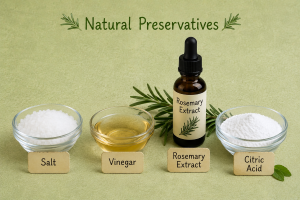
Look for the natural preservatives in your food ingredients.
- Salt & Sugar - Dehydrate microbes by drawing out water through osmosis. Found in jams, pickles, and jerky
- Citric Acid and Ascorbic Acid - lowers food pH to create an environment where bacteria can't thrive. Found in canned goods and sliced fruits.
- Vinegar (Acetic Acid) This acts as an antimicrobial agent. Used in pickled foods, condiments and some baked goods
- Rosemary Extract - This is a powerful natural antioxidant. Used to prevent fats from spoiling. Such as lunch meants, oils and salad dressings.
I still have quite a lot more to add to this article. I wanted to get this out there so you can know about the preservative that are both good and bad. So check back. Today is 08/02/2026.
Baking Soda
Good
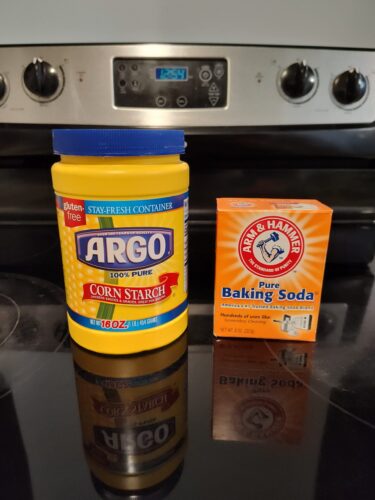
Store in a cool, dry place. Chemically Baking Soda remains chemically safe indefinitely, meaning it won't make you sick if you use it past the expiration date. If used in a capacity for a cleaning then the out-dated baking soda can still work.
Baking Soda Effectiveness timeline:
- Unopened Box - Lasts approximately 2 -3 years.
- Opened Box - Can last 6-12 months for appropriate baking power.
Testing Freshness:
- Mix about 1/4 teaspoon with a splash of vinegar in a cup
- The mixture should vigorously fizz and bubble immediately. If so, it is still good for baking purposes.
- If there is no reaction, it has lost its leavening power.
Note: Baking soda's physical properties do not change. It still is a great abrasive, deodorizer, cleaner, and grease cutter long after it loses its leavening power. So don't throw it out! There are many other uses for it.
Calcium Carbonate
Egg Allergen Alert!
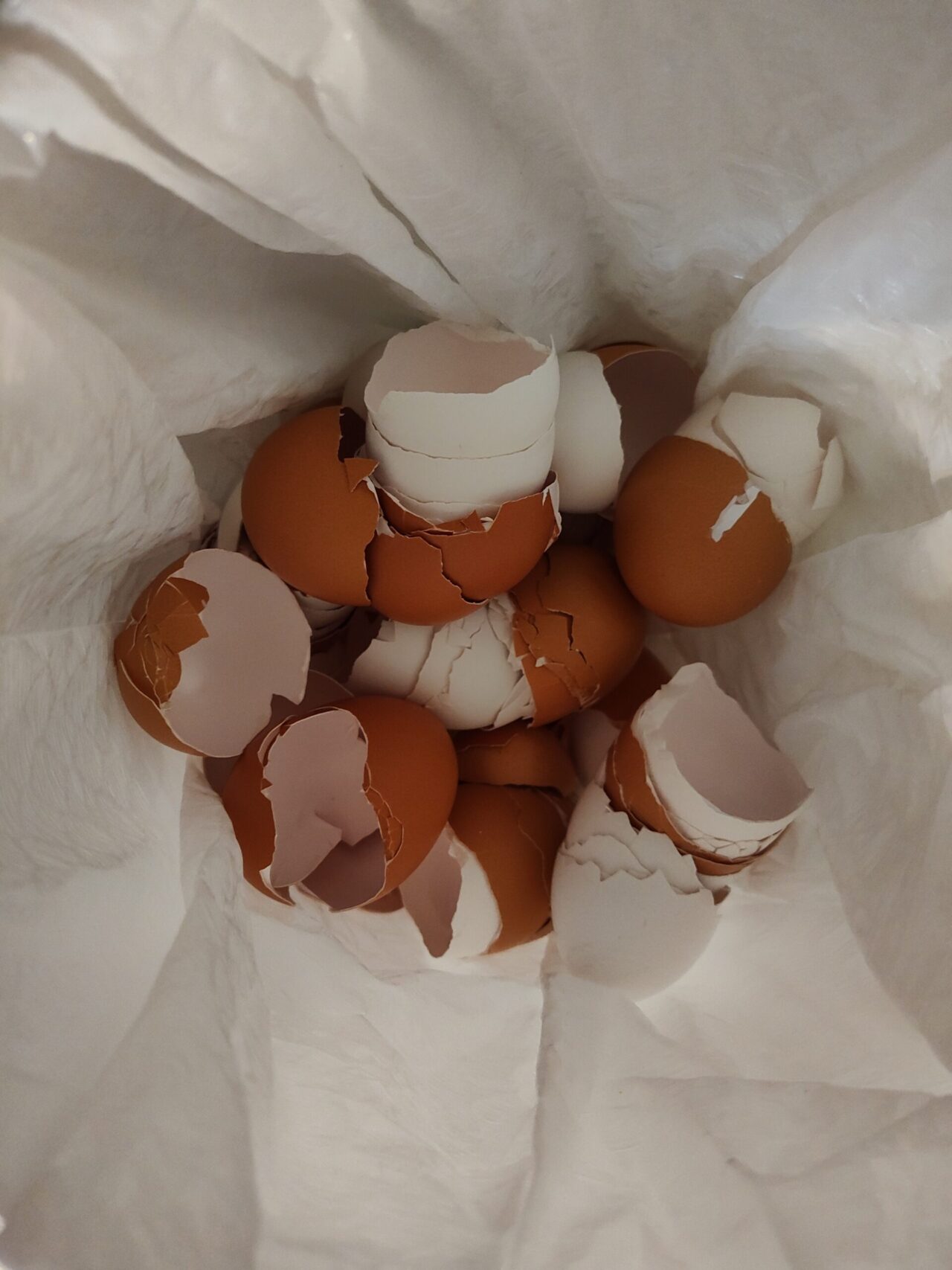
Crushed Eggshells: Eggshells are primarily calcium carbonate. Manufacturers may list it on the label as D3 added, or in the actual ingredients list as calcium carbonate.
Calcium carbonate is used in the food industry to extend shelf life and maintain food quality. It is relied upon for it's nutritional fortification in food and is also used as an anti-caking agent, calcium fortifier (D3 added), leavening agent, and a white food coloring.
Note: you will find this in
- Plant-based milks, like Almond, soy, and oat milk brands raising the calcium levels to match the levels in dairy milk.
- Cereals - Many boxed breakfast cereals use it as a cheap mineral fortifier and anti- caking agent.
- Bakery and flour products - used as a dough conditioner in some breads and white and whole wheat flours
- Sweets and chewing gum - used for a texturing base and white pigment.
- Infant formulas - use calcium carbonate to meet strict nutritional guidelines for growing babies.
- Nutritional bars and drinks - check your protein bars and electrolyte beverages for added nutrition.
- ALERT! Extends shelf-life of Fruits and Vegetables to avoid mold growth and slow decay. This is the case for a preservative created by Rice University. Fruits and Vegetables are soaked in a water bath that has calcium carbonate and turmeric as part of the solution. Simply rinse the fruits and vegetables (loose or packaged) even though it says "Pre-washed" to remove the preservative before cooking or consuming it fresh.
Corn Starch - good
Good
Corn Starch – has zero moisture content and as long as you keep it dry and sealed can last you almost indefinitely.
Corn Starch Effectiveness timeline:
- Unopened Storage - has an indefinite shelf life if kept in an airtight container. If kept in the original container, can last in the pantry for 1-2 years.
- Opened Box - Can last 6-12 months, if you store it in an airtight container. This will prevent moisture absorption and the possibility of pest infestation.
- Refrigeration is not recommended. Inconsistent humidity levels can cause clumping and mold growth.
Note: It is grain-based and frequently genetically modified (GMO). Cornstarch activation temperature is approximately 205. Boiling ensures you reach that temperature. Cornstarch works well with high-temperature cooking and dairy-based custards, puddings, and sauces. When used with lemon juice, vinegar, wine, or other acids, it may lose thickening power.
Arrowroot is a better thickening alternative for glazes, sweet and sour sauces, and pies that call for lemon or lime juice. Arrowroot is a good non-GMO substitution for instances when cornstarch is not the best choice, such as low-temperature cooking and freezing.
Egg Free Life is a participant in the Amazon Services LLC Associates Program, an affiliate advertising program designed to provide a means for sites to earn advertising fees by advertising and linking to Amazon.com. We also participate in other affiliate programs which compensate us for referring traffic.